

Sustainability
TCC's ultimate climate goal is to achieve carbon neutrality.
Sustainability at TCC
Tacoma Community College is committed to building a more sustainable, equitable, and resilient future. The Sustainability Action Committee leads campus-wide efforts to reduce environmental impact, promote sustainability in academics and operations, and strengthen partnerships with our community.
Together, we work to:
- Advance sustainability through TCC's Strategic Plan and our core value of responsibility
- Support student learning and leadership in environmental fields
- Steward campus spaces like the TCC Natural Area and Living Labratory
- Collaborate with local and regional partners on climate and equity initiatives
At TCC, sustainability is more than a practice, it is a commitment to our students, our community, and the generations to come.
We lead by example through the practice of environmental, institutional, and personal sustainability.”
Carbon Neutrality: Progress and Goals
We plan to achieve 45 percent emissions reduction from 2005 rates by 2030.
The Carbon Neutrality Report O’Brien360 created for TCC in 2024 focuses on both the past and the future of TCC’s carbon reduction efforts. Highlights include:
- The total greenhouse gas (GHG) emissions from energy and water use on both campuses in 2022 was 2,529 Metric Tons (MT) CO2e, a 35 percent reduction from 2005 emission levels.
- The 2020 goal was to reduce emissions from 2005 levels by 15 percent. We greatly exceeded that target.
- TCC is not required to comply with the State Agency Climate Leadership Act (2021 update) because it was not identified as a high emitter. However, the report recommends that we voluntarily work towards meeting the goals identified in the act.
- To meet our 2030 goal of reducing emissions by 45 percent compared to 2005 rates, TCC needs to reduce annual emissions by approximately 400 MT CO2e.
Clean Energy at TCC
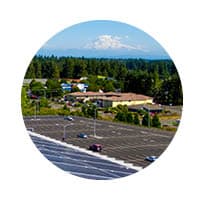 Solar Power
TCC has solar panels on the roofs of Building 15 and Building 10. Clean energy helps keep air clean in our community!
The solar panels on the roof of Building 10 produce 20 percent of the power needed to run the building.
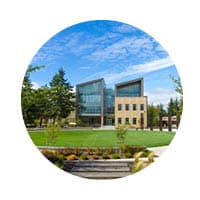 Geothermal Power
Beneath the green circle of the Campus Commons, a geothermal field produces energy for Building 13, the Harned Center for Health Careers. A network of pipes run water from the building, through the ground, and back into the building, cooling it in summer and heating it in winter. Essentially, TCC’s geothermal field provides some* of the building’s heating and cooling for free.
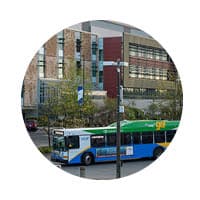 Partners in Power
In 2020, TCC partnered with Tacoma Power to conduct an energy audit. The audit led to concrete improvements including:
- All TCC buildings being individually metered.
- TCC Transit Center is the highest traffic transit center in Pierce County.
Like many large organizations, TCC devotes a large amount of land to parking lots. Efforts to make them more sustainable include:
- Permeable surfaces in some parking lots.
- EV chargers in some parking lots Students and employees don’t need to rely on cars to get to campus, though.
The Southwest corner of the TCC grounds is dedicated to a Pierce Transit hub which brings in busses from all over the city. A Park ‘n Ride is nearby, and there are plans to extend the rail from Seattle to the TCC campus.
Landscaping at TCC
Tacoma Community College is proud to cultivate a green campus through sustainable landscaping practices that protect the environment and strengthen our community. From the TCC Community Garden, where students grow organic produce for the campus food pantry, to native and drought-tolerant plantings that support local wildlife and pollinators, our outdoor spaces demonstrate eco-friendly design and stewardship. These living landscapes serve as hands-on learning environments that connect students, faculty, and the community while advancing TCC’s long-term sustainability goals.
TCC Natural Area & Living Lab
A 55-acre forest and wetland habitat that serves as a living classroom for our students and a natural refuge for the community.
Learn More!Sustainability Garden
Founded in 2020 & designed to provide students with an accessible space to practice organic gardening. The garden's produce is distributed to students via the TCC Food Pantry.
Titan Food Pantry
Provides food to get students through the day and food for home to fill in their budget. Additionally, a resource for referrals to services in the community that can help with food insecurity.
Learn More!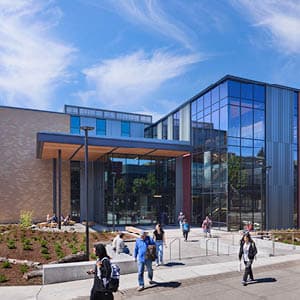 Salmon-Safe Certification
When the Center for Innovative Learning and Engagement (CILE) was constructed, TCC pursued Salmon-Safe Certification for the building’s landscaping. Salmon-Safe Certification ensures that water is filtered onsite, so that pollutants don’t make their way to the Chambers Bay Watershed and Puget Sound. According to the certification document:
“Stormwater from the site drains to Tacoma’s public stormwater conveyance system, which discharges to the south to Leach Creek, wetlands, and Chambers Creek before eventually discharging to Puget Sound. Building 10 did not have any stormwater mitigation systems. Stormwater from the CILE roof area and adjacent landscaping and walks will drain to bioretention cells. Some pervious pavement will be provided for an outdoor classroom. Stormwater that does not infiltrate from the bioretention cells will drain to an underground stormwater vault located in a parking lot west of the CILE. Stormwater from that parking lot will drain to a Filterra® Bioscape unit. The landscaping design for the CILE emphasizes native and drought-tolerant species, edible regional plantings, and visible features associated with stormwater management, including three vegetated “landscape depressions” that will provide bioretention for site stormwater."
Learning for a Sustainable Future
Sustainability is not only practiced across our campus, it is woven into the learning journey. Through academic pathways, community partnerships, and hands-on environmental experiences, students gain the knowledge and skills needed to help build a more sustainable and resilient future.
Sustainability Distinction Pathway
The Sustainability Distinction Pathway offers students the opportunity to focus their studies on environmental and social sustainability while completing their degree. Students take sustainability-centered courses across disciplines—such as ecology, environmental justice, climate science, and community resilience—and engage in projects that connect sustainability to real-world challenges. The pathway encourages critical thinking, systems understanding, and leadership in sustainability efforts both on campus and in the community. Below is a list of some of the issues covered in each category:
- Environmental topics: air, water, and land resource use, climate change, food/agriculture, energy, waste, over consumption, pollution, conservation, species loss.
- Social topics: population, social equity, livability, health equity, community development, education, social justice, food security.
- Economic topics:externalities, incentive-based regulations, cost/effect analysis, natural capital, tradable permits.
Hands-On Learning & Annual Events
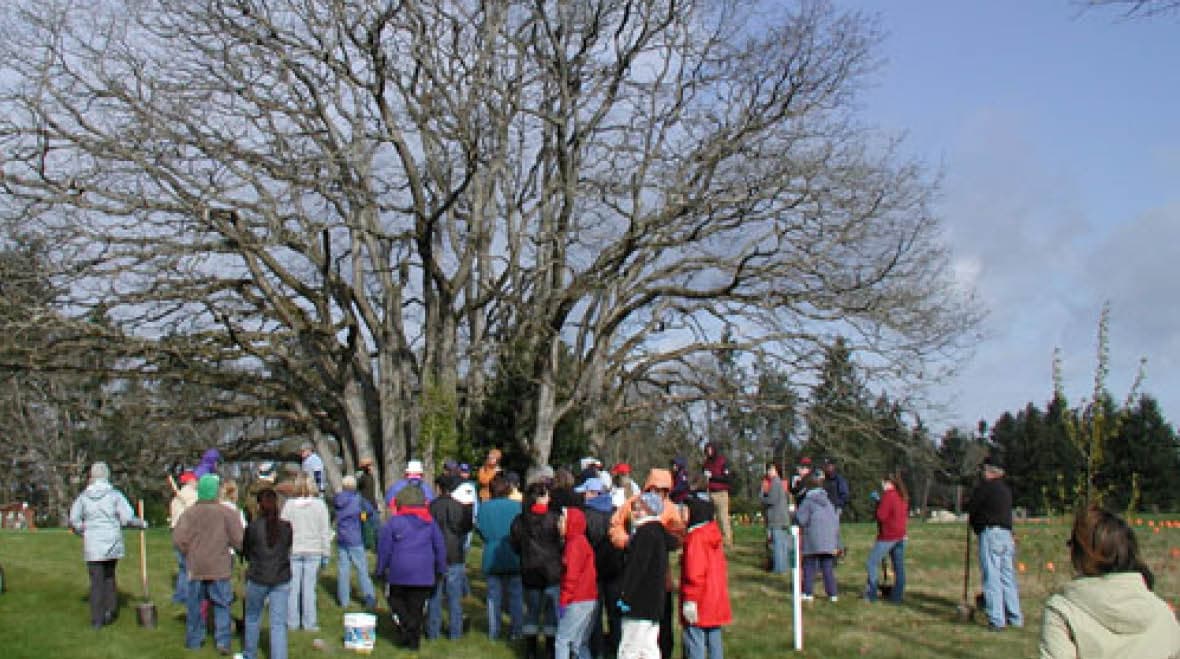
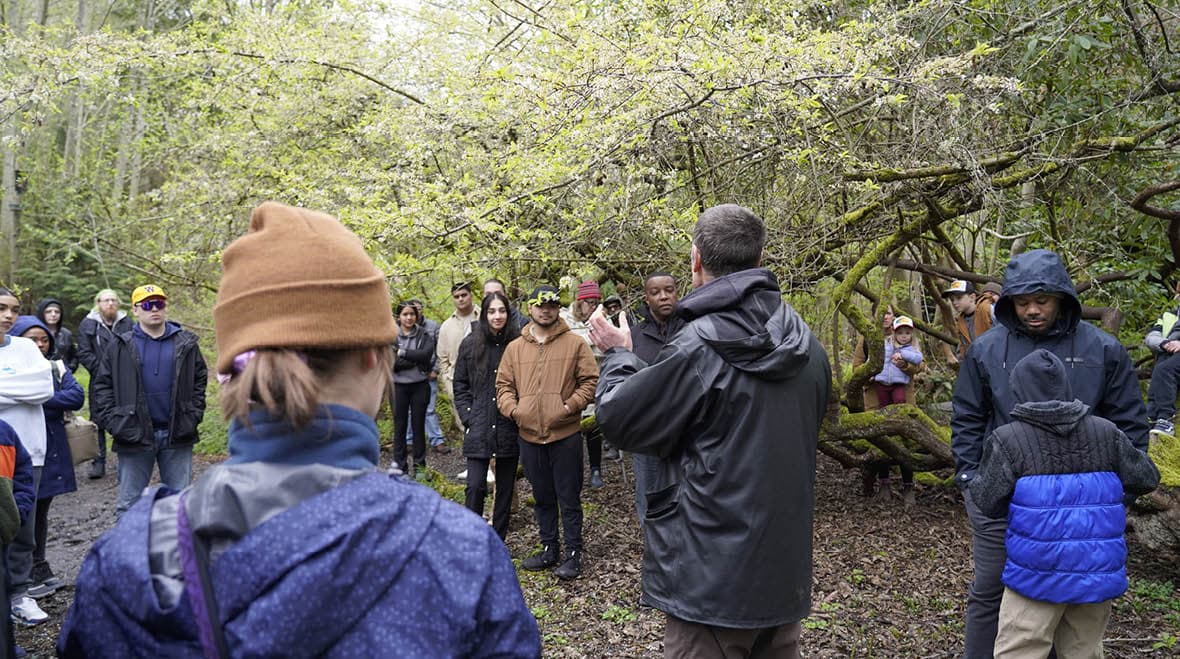
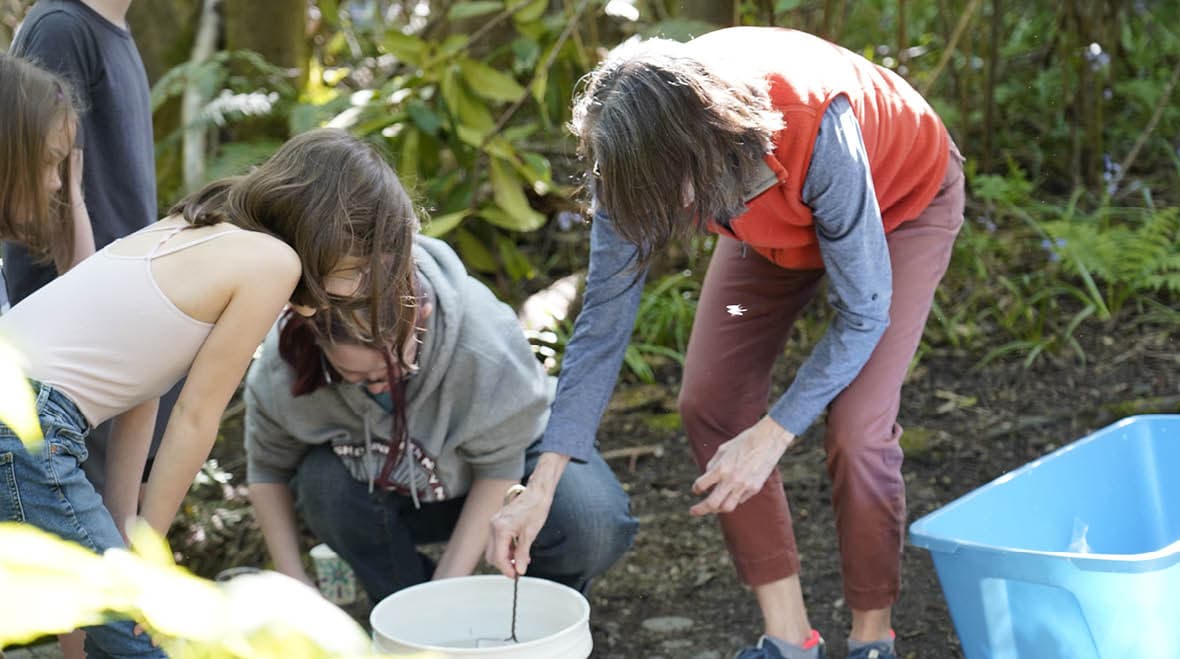
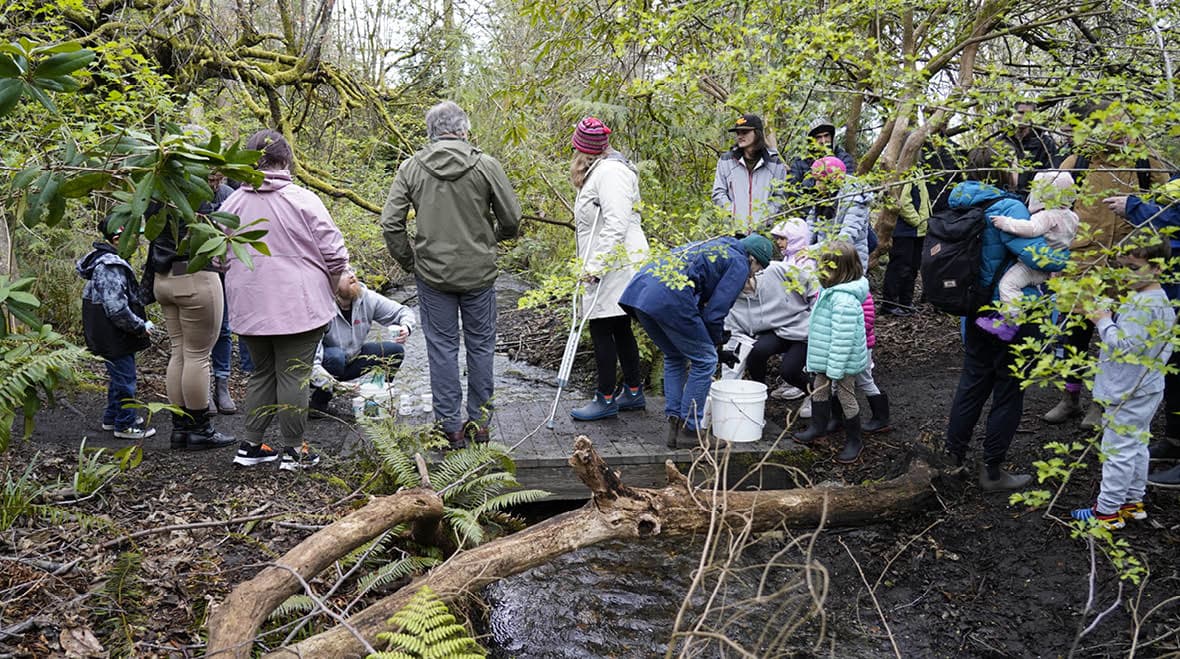
Earth Week
Each spring, TCC hosts a week of workshops, guest speakers, volunteer activities, and educational events that inspire students to take action for the planet. Activities highlight topics such as climate solutions, waste reduction, local ecosystems, and sustainable living.
Earth Day Activities
Learning extends beyond the classroom through a variety of annual events and experiential opportunities that engage students and the community in environmental stewardship.
Sustainability Action Committee
The Tacoma Community College Sustainability Action Committee (SAC) is a representative body that advances sustainable practices and policies guided by equity. The committee promotes sustainability in Tacoma Community College strategic plan, operations and curriculum as well as in our communities through productive partnerships. This committee has led events such as TCC’s Earth Day celebrations (which TCC has celebrated since the very first teach-in of 1970), designed the Sustainability Distinction Pathway for curriculum, and created a Sustainability Garden on campus with student organizations the Environmental Club and Student Veterans Organization.
Movers and Shakers
Chair | Kirsten Jenkins | Professor of Anthropology
Co-Chair| Katrina Taylor | Professior of Political Science
TCC Natural Area & Living Lab | Kristen Harrison | Professor of Biology
Sustainability in the Classroom | Shaun Henderson | Sustainability Program Coordinator & Faculty Advisor